The post Boost Your Social Media Engagement by 200% with These Proven Contest Strategies—Start Today! appeared first on Ikonik Digital Agency | Digital Marketing & Web Development Agency | Jamaica.
]]>How to Run a Successful Social Media Contest: A Step-by-Step Guide
In today’s fast-paced, ever-competitive digital world, businesses are always looking for new and creative ways to capture their audience’s attention, increase engagement, and expand their reach. One of the most effective strategies for accomplishing this is through social media contests.
But why are social media contests so powerful? They have the ability to generate excitement around your brand, encourage active participation, and provide you with valuable user-generated content. More importantly, when done right, social media contests can lead to significant, long-term growth for your business.
In this blog post, we’ll walk you through a step-by-step guide on how to run a successful social media contest. Whether you’re looking to increase brand awareness, attract new followers, or generate user-driven content, we’ll cover everything you need to know.
Why Social Media Contests Work: The Power Behind the Strategy
Before diving into the specifics, let’s first explore why social media contests are such a potent tool for business growth.
- Increased Engagement: Social media contests are designed to excite and engage users. When participants enter your contest by liking, sharing, or commenting on posts, they increase the visibility of your brand. People love challenges and giveaways, and this sense of excitement can lead to an influx of likes, comments, and shares—boosting engagement and making your content more interactive.
- Attract New Followers: Contests often require participants to follow your social media account as part of the entry process. This gives you the opportunity to expand your audience organically. It’s an excellent way to increase your follower count without relying solely on paid ads.
- User-Generated Content: Many contests encourage users to create and share content related to your brand. This is an invaluable source of authentic, high-quality content that you can repurpose for future marketing campaigns. It also helps foster a sense of community among your followers.
- Boost Brand Awareness: When users share your contest with their followers or friends, they help to increase your brand’s exposure. This is particularly powerful for small businesses or those just starting out, as contests give you the opportunity to reach a much wider audience.
Step-by-Step Guide to Running a Successful Social Media Contest
Now that we understand the value of social media contests, let’s break down how to run one effectively, step by step.
Step 1: Set Clear Goals for Your Contest
Before you start planning your contest, it’s important to define the objective. What do you want to achieve? Some common goals include:
- Increasing brand awareness: You want to introduce your business or products to a wider audience.
- Growing your social media following: You’re aiming to gain new followers on platforms like Instagram, Facebook, or Twitter.
- Engaging with your existing audience: You want to increase interactions and strengthen your relationship with current followers.
- Generating user-generated content: You want users to create and share content that can be used in future campaigns.
Having clear goals will shape every aspect of your contest, from the prizes you offer to how you design the rules.
Step 2: Choose the Right Social Media Platform
Not all social media platforms are created equal. The best platform for your contest depends on where your target audience is most active. Here’s a quick guide on which platform may work best for your business:
- Instagram: If your brand is visually-driven (fashion, food, lifestyle, etc.), Instagram is ideal. The platform’s features like photo contests, tag-a-friend giveaways, and hashtag challenges make it easy to engage users.
- Facebook: Perfect for a broad audience, Facebook is great for contests where users share, like, or comment on posts to participate. It’s one of the most popular platforms for contests due to its large and diverse user base.
- Twitter: Best for quick and easy contests with minimal effort. Think hashtag campaigns or retweet-to-win contests. It’s a platform built for brevity and speed.
- TikTok: If your brand focuses on creativity and fun, TikTok is your platform. Video challenges or user-generated content through hashtag challenges are popular on TikTok.
Step 3: Choose the Type of Contest
The type of contest you choose will greatly influence the level of engagement. Here are some common types of social media contests to consider:
- Giveaways: These are simple and effective. Users enter by liking, sharing, commenting, or tagging friends. The winner is typically chosen at random. This type of contest works well to rapidly increase engagement and grow your follower base.
- Photo or Video Contests: Encourage participants to submit their best photo or video featuring your product or brand. This type works especially well in industries like fashion, food, or lifestyle.
- Hashtag Challenges: Ask users to create content using a branded hashtag. This type of contest generates organic content that promotes your brand while fostering community engagement.
- Poll or Quiz Contests: Engage your audience with a fun quiz or poll. Offer prizes for correct answers or encourage participation by offering incentives for engagement.
- Referral Contests: Reward users who refer others to your social media page. The more people they refer, the better their chances of winning.
Step 4: Choose a Prize That Will Excite Participants
The prize is the main draw for your contest, so you want it to be compelling enough to encourage people to participate. Here’s how to choose the right prize:
- Relevant to Your Brand: Ensure the prize aligns with your brand’s identity. For example, if you run a restaurant, offer a gift card or a free meal. If you’re a fitness brand, consider giving away workout gear or a membership.
- Desirable: The prize should be appealing enough to entice users, but not so extravagant that it seems unrealistic or out of reach.
- Shareable: Choose a prize that people will want to share with their friends. The more buzz the prize generates, the more exposure your brand will receive.
Step 5: Set Contest Rules and Guidelines
Clear and concise rules are essential for any contest. Here’s what to include:
- How to Enter: Be specific about the steps participants need to follow. For example, “Follow our account, like this post, and tag two friends.”
- Eligibility Criteria: State who can enter. Consider factors such as age, location, and any other relevant restrictions.
- Deadline: Clearly communicate when the contest starts and ends. This creates urgency and helps manage expectations.
- Winner Selection Process: Will the winner be chosen at random or based on creativity? Make sure to clarify how the winner will be selected.
Step 6: Promote Your Contest
Now that everything is set, it’s time to get the word out. Here are some ways to promote your contest:
- Paid Ads: Use social media ads to increase your contest’s visibility and reach a broader audience.
- Collaborate with Influencers: Partnering with influencers can help spread the word about your contest. Choose influencers whose audience aligns with your target demographic.
- Cross-Promotion: Promote the contest across all your social media platforms and email newsletters to maximize exposure.
- Hashtags: Create a unique contest hashtag to help participants track their entries and increase discoverability.
Step 7: Engage with Participants
Throughout the contest, make sure to engage with participants. Like, comment, and share their entries to show your appreciation. This fosters a sense of community and encourages even more people to participate.
Step 8: Announce the Winner and Follow Up
Once the contest ends, announce the winner in a fun and engaging way. You can do this via live video, an Instagram Story, or a dedicated post. Be sure to thank everyone for participating.
Afterward, follow up with new followers by offering them a special discount or exclusive offer to keep them engaged.
Conclusion: Why Social Media Contests Are Worth the Effort
Running a social media contest isn’t just about giving away prizes. It’s a powerful way to engage with your audience, increase your reach, and generate valuable user-generated content. By offering an exciting prize, promoting the contest strategically, and interacting with your audience, you create a fun and rewarding experience that will have lasting benefits for your brand.
At Ikonik Digital, we specialize in creating engaging and effective social media campaigns, including contests. If you’re ready to take your brand’s social media presence to the next level, contact us today at [email protected]. Let’s strategize and bring your brand the attention it deserves!
The post Boost Your Social Media Engagement by 200% with These Proven Contest Strategies—Start Today! appeared first on Ikonik Digital Agency | Digital Marketing & Web Development Agency | Jamaica.
]]>The post Ride the Trend Wave: How to Turn Seasons Into Sales With Smarter Social Media Campaigns appeared first on Ikonik Digital Agency | Digital Marketing & Web Development Agency | Jamaica.
]]>How to Leverage Seasonal Trends in Social Media Marketing for Maximum Impact
Seasonal trends are more than just fleeting moments—they are opportunities to drive engagement, increase sales, and build stronger connections with your audience. Whether it’s a major holiday, a cultural observance, or a change in season, these events provide the perfect context to align your social media efforts with the interests and emotions of your audience. In this post, we’ll dive into the power of seasonal trends in social media marketing and show you how to harness them for greater business success.
Why Seasonal Trends Matter in Social Media Marketing
Social media thrives on relevance, and there’s no better way to stay relevant than by tapping into seasonal trends. Whether it’s the excitement of a holiday or the anticipation of a major event, seasonal trends allow you to resonate with your audience in real-time. Here are some key reasons why you should prioritize seasonal trends in your strategy:
Increased Engagement
Seasonal content tends to attract more attention because it’s timely and relevant. When you create content that aligns with the season, your audience is more likely to engage with it. From likes and shares to comments and conversations, well-timed posts foster interaction.
Relatability and Connection
Tying your content to a seasonal event helps make your brand feel more connected to your audience. Whether it’s the joy of the holidays, the excitement of a summer vacation, or the anticipation of a new year, seasonal content taps into the shared experiences and emotions of your followers.
Boosted Sales
Holidays like Christmas, Valentine’s Day, and Black Friday are prime times for purchases. By aligning your marketing campaigns with these dates, you position your brand to influence purchasing decisions directly.
Creativity in Content
Seasonal trends spark creativity. From themed graphics to unique campaign ideas, the mood of the season can inspire innovative content that stands out and engages your audience in new ways.
How to Leverage Seasonal Trends on Social Media
Now that we understand the importance of seasonal trends, let’s explore actionable strategies you can use to capitalize on them in your social media campaigns.
1. Plan Ahead and Set a Calendar
Planning ahead is essential to leveraging seasonal trends effectively. Waiting until the last minute can lead to rushed ideas and poorly executed campaigns. By proactively scheduling your content around key dates, you can ensure a well-organized approach.
Create a seasonal content calendar:
Start by marking out the key holidays and events that matter to your business. Don’t just focus on global holidays like Christmas or New Year’s—include industry-specific events and cultural observances as well. Think about fashion weeks, product launches, or Pride Month. Mapping out a calendar will help you stay ahead of the game and prepare content in advance.
Align your campaigns with the season:
Once your calendar is set, tailor your campaigns to the specific season. For example, a fitness brand could focus on New Year’s resolutions in January, while a travel agency might promote summer vacation packages in June. When you align your campaigns with the season, they feel more organic and relevant to your audience.
2. Use Relevant Hashtags to Gain Visibility
Hashtags are an easy and effective way to join seasonal conversations and increase your content’s reach. By using trending hashtags, you can make sure your posts get seen by a wider audience.
Research trending seasonal hashtags:
Look for hashtags tied to the season or event, such as #ValentinesDay, #SpringBreak, or #BlackFridayDeals. By adding these to your posts, you can participate in broader conversations and gain visibility.
Create custom hashtags for your brand:
In addition to using popular hashtags, consider creating your own branded hashtag. For example, if you’re running a holiday sale, create a unique hashtag like #HolidaySavingsWith[YourBrand]. This helps build a community around your seasonal campaign and encourages customers to share their experiences.
Hashtags not only make your content discoverable but also allow you to engage with people outside your current follower base, expanding your reach.
3. Run Time-Limited Promotions and Offers
Seasonal trends provide the perfect opportunity to run promotions that create urgency. Whether it’s a limited-time discount, a flash sale, or an exclusive offer, these promotions push customers to act quickly.
Seasonal sales:
Major sales events like Black Friday or Cyber Monday are ideal times to offer discounts. These promotions are anticipated, widely discussed, and typically drive a surge in sales. Aligning your brand with these events can boost your revenue significantly.
Flash sales or daily deals:
Flash sales tied to specific events, such as National Coffee Day or Mother’s Day, create a sense of urgency that prompts immediate action. The shorter the promotion, the more urgency it generates, making customers feel like they need to act now.
Gifting bundles during the holidays:
During the holiday season, offering product bundles can be a great way to encourage customers to buy more. Packaging products together as gifts makes your offerings more attractive to gift-givers, and it often results in higher sales.
Highlight these time-limited promotions in your posts and stories to ensure your audience doesn’t miss out.
4. Create Themed Content and Visuals
One of the most exciting aspects of seasonal trends is the chance to get creative with your content. Seasonal visuals have a significant impact on engagement, as they resonate with your audience and capture their attention.
Use seasonal colors and designs:
Incorporating colors that are associated with the season can help your posts feel more festive. For example, use orange and black around Halloween or red and green during the winter holidays.
Seasonal GIFs, stickers, and emojis:
Platforms like Instagram and TikTok make it easy to add fun, seasonal elements like stickers, GIFs, and emojis. These playful additions make your posts feel more engaging and on-brand for the season.
Promote seasonal product launches or features:
If you’re launching a new product or service, tie it to the season. For example, a swimwear brand might release a new collection just before summer and promote it with sunny, vibrant visuals. This connection between your product and the season boosts relevance and excitement.
Creating visually appealing, seasonally themed content helps your posts stand out and keeps your audience interested.
5. Engage with Your Audience through Interactive Content
Seasonal trends present the perfect opportunity to engage with your followers in a more interactive way. Social media thrives on engagement, and seasonal events make your audience more open to participation.
Polls and quizzes:
Take advantage of the interactive features on platforms like Instagram and Facebook. Use polls and quizzes to ask fun, seasonal questions. For example, “What’s your favorite Halloween costume?” or “Which holiday dessert is the best?” These interactive posts encourage your audience to participate and share their opinions.
Contests and giveaways:
Running a contest or giveaway based on a seasonal theme is another great way to engage your audience. Ask your followers to share their favorite holiday traditions or post pictures of how they’re using your products during the season. Offering a prize can incentivize participation and spread excitement.
User-generated content:
Encourage your followers to create and share content featuring your products. By using a unique hashtag, your customers can post pictures or videos of your products in use during the season, giving you additional exposure and building a sense of community.
Interactive content fosters a deeper connection with your audience and can turn your followers into brand advocates.
6. Collaborate with Influencers and Partners
Influencer marketing is a powerful way to amplify your seasonal campaigns. By partnering with influencers who already have a loyal following, you can extend your reach and tap into new customer bases.
Seasonal influencer partnerships:
Find influencers who resonate with your target audience and who are already engaging with seasonal content. For example, a fashion influencer can showcase your winter or summer collection, while a food blogger might create holiday-themed recipes using your products. Influencers can bring an authentic and organic touch to your campaigns.
Collaborate on giveaways:
Collaborating with other brands for a joint giveaway can help you reach an even larger audience. For instance, if you sell beauty products, partner with a skincare brand for a holiday giveaway. This cross-promotion introduces your brand to new potential customers and creates buzz around the seasonal event.
Influencers and brand collaborations help you build credibility and authenticity, which can drive more engagement and sales.
Seasonal Trend Ideas for Social Media Campaigns
To give you some inspiration, here are some seasonal trend ideas to consider for your social media campaigns:
- New Year’s Resolutions (January): Promote fitness products, self-care services, or personal development tools.
- Valentine’s Day (February): Focus on love, relationships, and gifting—ideal for products like jewelry, flowers, or experiences.
- Summer (June-August): Promote outdoor products, vacations, or summer-themed services.
- Back-to-School (August/September): Highlight educational tools, kids’ products, or office supplies.
- Holiday Season (November-December): Offer gift ideas, festive promotions, and holiday-themed content.
By leveraging these trends, you can create social media campaigns that resonate deeply with your audience and help your brand stay top of mind during key seasonal moments.
Conclusion
Seasonal trends offer a wealth of opportunities for social media marketers. By planning ahead, using creative visuals, engaging your audience through interactive content, and running timely promotions, you can leverage these trends to boost engagement and increase sales. Whether it’s a flash sale, a holiday promotion, or a collaboration with influencers, the key to success is making your campaigns feel timely, relevant, and connected to your audience’s current experiences.
At Ikonik Digital, we specialize in helping businesses create impactful social media campaigns that align with seasonal trends. If you’re ready to take your seasonal campaigns to the next level, contact us today at [email protected] to get started!
The post Ride the Trend Wave: How to Turn Seasons Into Sales With Smarter Social Media Campaigns appeared first on Ikonik Digital Agency | Digital Marketing & Web Development Agency | Jamaica.
]]>The post Stop Wasting Ad Spend: How the Facebook Pixel Can Increase B2B Leads by 40% appeared first on Ikonik Digital Agency | Digital Marketing & Web Development Agency | Jamaica.
]]>Harnessing the Power of Facebook Pixel for Successful B2B Marketing Campaigns
Business-to-business (B2B) marketing can often feel like navigating through a complex maze. Long sales cycles, multiple decision-makers, and intricate relationships can make it challenging to drive results. However, digital marketing has democratized the playing field, offering tools that help businesses succeed. One such powerful tool is Facebook Pixel.
If you’re not using Facebook Pixel yet, or you’re unsure how it can help your B2B campaigns, this post will guide you through everything you need to know. Let’s explore how mastering Facebook Pixel can revolutionize your marketing approach, providing you with valuable insights, better ad targeting, and improved ROI.
What is Facebook Pixel?
In simple terms, Facebook Pixel is a small piece of code that you place on your website. Once integrated, this code tracks actions users take on your site, such as page views, form submissions, and purchases. By gathering this data, Facebook Pixel helps you measure your advertising effectiveness, optimize your ads, and target the right audience for your campaigns.
In the B2B space, where sales cycles are often lengthy and involve multiple decision-makers, understanding your audience’s behavior and actions is crucial. Facebook Pixel allows you to track how people interact with your ads and your website, making it easier to nurture leads and convert them into customers.
The Key Benefits of Facebook Pixel in B2B Marketing
Facebook Pixel offers several key benefits that can enhance your B2B marketing efforts. Here’s how:
1. Conversion Tracking
Facebook Pixel allows you to track user actions on your website after they’ve viewed or interacted with your Facebook ads. For example, you can monitor whether visitors take specific actions, such as signing up for your newsletter or completing a purchase.
This data is essential because it shows how effective your ads are at driving meaningful actions. You can also see how users engage with your site across different devices, providing insight into whether desktop or mobile users are more likely to convert.
2. Remarketing
Remarketing is an essential strategy for B2B businesses, where the sales journey often requires multiple touchpoints. Facebook Pixel enables you to show tailored ads to users who have already visited your website but haven’t completed the desired action. This reminds them of your brand and encourages them to return.
For instance, if a potential lead browses your services but leaves without filling out a contact form, Facebook Pixel lets you retarget them with ads that guide them back to your website to complete the action.
3. Audience Building
With Facebook Pixel, you can build custom and lookalike audiences. A custom audience allows you to target individuals who have interacted with your site in some way, such as watching a video or visiting a landing page.
On the other hand, lookalike audiences are groups of people similar to your existing customers. By using the data Facebook Pixel collects, you can expand your reach and target individuals who are more likely to be interested in your business.
4. Ad Optimization
Facebook Pixel doesn’t just track data; it also helps optimize your ads. By tracking conversions, the tool identifies the audience most likely to take your desired action, like making a purchase or signing up for a webinar.
Facebook’s algorithm then adjusts your ad delivery, focusing on individuals who are most likely to convert. This leads to better ad performance, more efficient ad spend, and higher returns on investment (ROI).
How to Use Facebook Pixel Effectively in Your B2B Marketing Campaigns
Now that we understand the benefits, let’s dive into how you can use Facebook Pixel in your marketing campaigns. The process might seem technical, but it’s straightforward once you break it down. Follow these steps to get started.
Step 1: Install Facebook Pixel on Your Website
The first step is installing the Facebook Pixel code on your website. Facebook provides detailed instructions on how to do this, which can usually be done by your web developer. Once installed, the Pixel will begin collecting data about visitors and their interactions with your site.
After installation, it’s important to start tracking specific actions, or events, that occur on your site. These could include actions like:
- Page views
- Form submissions
- Product purchases
- Downloads
By setting up event tracking, you can gain valuable insights into user behavior and conversion rates.
Step 2: Set Up Custom Conversions
In B2B marketing, the buyer’s journey is rarely linear. Potential clients may engage with your business at different stages before making a purchase decision. Setting up custom conversions allows you to track specific actions at each stage of the buyer’s journey.
For example, you can track when someone downloads a whitepaper, watches a demo video, or fills out a contact form. Each of these actions signals that the lead is moving through your sales funnel, and you can tailor your marketing accordingly.
Step 3: Build Custom and Lookalike Audiences
With Facebook Pixel data, you can create custom audiences based on website activity. For example, you might target individuals who visited a specific product page but didn’t make a purchase.
Lookalike audiences, however, allow you to target individuals who share similar characteristics to your current customers. This is particularly valuable for B2B businesses with a niche market. Expanding your reach to lookalike audiences increases the likelihood of finding new customers who are already aligned with your brand.
Step 4: Use Remarketing and Ad Optimization
With Facebook Pixel, you can retarget users who have interacted with your site but didn’t convert. Whether they abandoned their cart or just browsed your site, you can deliver targeted ads to re-engage these leads.
Additionally, Facebook Pixel helps optimize your ads for conversions. Based on user behavior, Facebook will serve your ads to people who are most likely to take the desired action, improving the efficiency of your campaigns.
Step 5: Measure and Adjust Your Campaigns
One of the biggest advantages of digital marketing is the ability to measure performance in real-time. Facebook Pixel allows you to track conversions, sales, and other key metrics. By regularly reviewing this data, you can adjust your campaigns, optimizing ad spend and maximizing ROI.
Facebook Pixel’s reporting tools provide insights into which ads are performing best, allowing you to refine your strategy and achieve better results.
Overcoming Common B2B Marketing Challenges with Facebook Pixel
B2B marketers face unique challenges, such as lengthy sales cycles and the need to engage multiple decision-makers. Facebook Pixel addresses many of these challenges by providing insights into user behavior, optimizing ad spend, and helping you target the right audience.
However, it’s important to remember that Facebook Pixel isn’t a standalone solution. It should be part of a comprehensive digital marketing strategy that also includes SEO, content marketing, email campaigns, and more. By combining these tactics, you can effectively nurture leads and drive conversions.
Conclusion: Maximizing the Impact of Facebook Pixel in B2B Marketing
Facebook Pixel is an incredibly powerful tool for B2B marketers. It allows you to track user behavior, optimize ads, retarget leads, and measure your campaigns’ effectiveness. By using this tool, you can enhance your marketing strategy, improve ROI, and connect with your audience on a deeper level.
To truly succeed in B2B marketing, however, Facebook Pixel should be part of a broader, multi-channel approach. With a strategic plan, continuous optimization, and the right tools, you can navigate the complexities of B2B marketing and achieve long-term success.
If you’re looking to take your marketing campaigns to the next level, reach out to Ikonik Digital today at [email protected]. Our team is ready to help you implement the best strategies for your business, and we’re here to support you every step of the way.
Key Takeaways:
- Track User Actions: Use Facebook Pixel to measure conversions and understand user behavior.
- Retarget Leads: Engage with potential customers who have interacted with your website but haven’t converted.
- Optimize Ads: Facebook Pixel helps target the right audience for better ad performance.
- Expand Your Reach: Build custom and lookalike audiences to find more potential customers.
- Measure and Adjust: Use real-time data to refine your campaigns for maximum impact.
The post Stop Wasting Ad Spend: How the Facebook Pixel Can Increase B2B Leads by 40% appeared first on Ikonik Digital Agency | Digital Marketing & Web Development Agency | Jamaica.
]]>The post Boost Engagement by 60%: How to Use Gamification in Digital Marketing Campaigns Now appeared first on Ikonik Digital Agency | Digital Marketing & Web Development Agency | Jamaica.
]]>How to Use Gamification in Digital Marketing Campaigns
Businesses are constantly looking for ways to engage customers and stand out in an ever-growing sea of content. Gamification, the practice of incorporating game elements into non-game contexts, is a powerful tool that can enhance your digital marketing campaigns, boost engagement, and drive results. Whether you’re a small business owner or a corporate executive, integrating gamification into your marketing strategy can transform how you interact with your audience and motivate them to take action.
In this blog post, we’ll explore how to effectively use gamification in digital marketing campaigns. We’ll dive into the benefits, strategies, and examples to help you harness this innovative approach and improve your customer interactions.
What is Gamification in Digital Marketing?
Gamification is the process of applying game-like elements—such as point systems, badges, rewards, challenges, and leaderboards—into digital marketing to encourage engagement and incentivize specific actions. It taps into the human desire for achievement, competition, and rewards, making the experience more enjoyable and motivating for users.
In digital marketing, gamification can enhance customer interactions, whether through a promotional campaign, social media engagement, or customer loyalty programs. By making marketing more fun and interactive, businesses can improve brand awareness, customer retention, and overall satisfaction.
Why Use Gamification in Digital Marketing?
Gamification can do wonders for your digital marketing efforts, but why exactly should you incorporate it? Here are some compelling reasons:
1. Increased Engagement
Gamification transforms passive experiences into active, interactive ones. Customers who feel like they’re participating in a game are more likely to engage with your brand. Whether it’s completing a challenge or earning points for taking certain actions, gamification drives customer involvement and keeps them coming back for more.
2. Improved Brand Loyalty
When customers are rewarded for engaging with your brand, they feel valued. Gamification fosters a sense of accomplishment, and when users reach milestones or earn rewards, it creates positive feelings associated with your brand. This leads to increased loyalty and repeat business.
3. Enhanced Customer Experience
By turning the interaction into a fun and rewarding experience, you provide customers with a memorable journey. Whether it’s through earning points, unlocking achievements, or competing in a challenge, gamification enhances the overall experience and makes it more enjoyable.
4. Boosted Conversion Rates
Gamification can help guide customers through the sales funnel by making the process more enjoyable. By offering incentives such as discounts, exclusive content, or rewards for completing certain actions, you can drive conversions and encourage users to take the next step in their buying journey.
Key Elements of Gamification in Digital Marketing
To successfully incorporate gamification into your digital marketing strategy, you need to include several key elements that drive engagement and motivate action. Let’s explore these elements in more detail:
1. Points and Rewards
Points are one of the most common gamification elements. Customers can earn points by completing specific actions, such as signing up for a newsletter, making a purchase, or sharing your content on social media. These points can then be redeemed for rewards, such as discounts, free products, or exclusive access to content. This system incentivizes customers to take actions that benefit your business, while also making them feel rewarded for their efforts.
2. Badges and Achievements
Badges are symbolic rewards that represent milestones or accomplishments. For example, you might award a badge for completing a purchase, referring a friend, or interacting with your brand a certain number of times. Badges create a sense of achievement and motivate users to earn more, fostering engagement over time.
3. Challenges and Competitions
Challenges and competitions are excellent ways to drive engagement and create excitement around your brand. You could host a social media challenge, encourage users to complete a series of tasks, or create contests where participants can win prizes. These types of gamified elements tap into customers’ competitive nature and create a sense of urgency, driving participation and increasing interaction with your brand.
4. Leaderboards
Leaderboards allow customers to see how they rank against others in terms of points, achievements, or challenge completion. This competitive element can spur users to engage more deeply with your brand in order to climb the rankings. By fostering competition, leaderboards can boost both engagement and brand visibility.
5. Progress Bars
A progress bar visually represents how far someone has come in a challenge, campaign, or loyalty program. As users see their progress toward a goal, they’re motivated to continue participating. It’s a simple but effective way to keep customers engaged and remind them of the rewards that lie ahead.
How to Use Gamification in Digital Marketing Campaigns
Now that we’ve covered the basic elements of gamification, let’s look at how you can incorporate these tactics into your digital marketing campaigns.
1. Gamified Email Campaigns
Email marketing is a powerful tool for engaging your audience, and you can take it to the next level by adding gamification elements. Here’s how:
- Create Challenges: Offer recipients a series of tasks or challenges to complete over the course of a week or month. For example, encourage them to make purchases, share your emails on social media, or refer friends to earn rewards.
- Include Progress Bars: Use progress bars in your emails to show recipients how close they are to earning a reward or achieving a goal.
- Reward Points: Include a points system in your emails, where customers can earn points for specific actions like opening the email, clicking a link, or making a purchase.
2. Gamified Social Media Campaigns
Social media platforms are perfect for gamification. Here’s how you can use gamified elements to boost engagement:
- Host Contests and Giveaways: Organize fun contests where followers can participate to win prizes. Encourage them to share your content, tag friends, or comment to enter the contest.
- Use Polls and Quizzes: Run polls or quizzes to engage your audience in a playful way. Use the results to offer personalized rewards or discounts to participants.
- Create Hashtag Challenges: Challenge your followers to post content using a specific hashtag for a chance to win a prize. This not only engages users but also promotes your brand organically.
3. Loyalty and Rewards Programs
A gamified loyalty program is an excellent way to encourage repeat business. Here’s how to implement one:
- Points System: Reward customers with points for every purchase, social media share, or review they leave. Allow them to redeem these points for discounts or free products.
- Tiered Rewards: Create different levels within your loyalty program, such as bronze, silver, and gold tiers. As customers reach higher levels, they unlock more valuable rewards, motivating them to engage more with your brand.
- Gamified Referrals: Reward customers who refer friends or family with points or badges. This taps into both their social network and their desire for recognition.
4. Gamified Online Surveys
Surveys are a great way to gather feedback from your audience, but they can be tedious for participants. Make surveys more engaging by gamifying the experience:
- Add Progress Bars: Show participants how far they are into the survey and how many steps are left.
- Offer Rewards: Give respondents points or badges for completing surveys, which they can redeem for discounts or prizes.
- Use Interactive Elements: Include interactive quizzes, questions, and images to make the survey more engaging and fun.
5. Mobile App Gamification
If your business has a mobile app, gamification can be seamlessly integrated to enhance the user experience. Here’s how:
- In-App Challenges: Create challenges within the app where users can earn rewards for completing certain actions, like making purchases, interacting with features, or checking in.
- Badges and Leaderboards: Award badges for milestones like first-time purchases or frequent use of the app. Display leaderboards to encourage users to compete for top spots.
- Progress Tracking: Use progress bars to show users how close they are to unlocking rewards or benefits.
Best Practices for Gamifying Your Marketing Campaigns
To ensure the success of your gamification strategy, follow these best practices:
1. Make It Fun and Easy
Gamification should be enjoyable, not frustrating. Keep tasks and challenges simple and easy to understand. Avoid making it too complex or time-consuming, as this could deter participation.
2. Align with Your Brand Goals
Your gamification strategy should align with your overall business goals. Whether you’re trying to increase brand awareness, drive sales, or enhance customer loyalty, the gamified elements you choose should directly support these objectives.
3. Provide Real Value
While gamification is fun, it’s also important to offer real value to your customers. Ensure that the rewards, prizes, and incentives you offer are meaningful and worth the effort.
4. Track and Analyze Performance
Gamification can provide valuable insights into your customers’ behavior. Track how users are engaging with your gamified campaigns and analyze the data to optimize future efforts.
Conclusion: Unlock the Power of Gamification in Your Digital Marketing
Gamification is a powerful tool that can significantly enhance your digital marketing campaigns. By incorporating game elements like points, badges, challenges, and rewards, you can boost engagement, improve customer loyalty, and increase conversions. Whether you’re running a loyalty program, social media campaign, or email marketing strategy, gamification can take your efforts to the next level.
Are you ready to gamify your digital marketing campaigns? Reach out to Ikonik Digital at [email protected] to discuss how we can help you implement a gamified strategy that drives results for your business.
By using gamification strategically, you can transform your digital marketing campaigns into engaging, rewarding experiences that keep customers coming back for more. Don’t wait—start gamifying today!
The post Boost Engagement by 60%: How to Use Gamification in Digital Marketing Campaigns Now appeared first on Ikonik Digital Agency | Digital Marketing & Web Development Agency | Jamaica.
]]>The post Why 85% of Buyers Trust Social Proof — Unlock Its Power to Attract More Customers Today appeared first on Ikonik Digital Agency | Digital Marketing & Web Development Agency | Jamaica.
]]>The Power of Social Proof in Marketing: How to Boost Your Brand’s Credibility and Drive Sales
In the fast-paced world of marketing, gaining consumer trust is no easy feat. One of the most effective ways to build that trust—and increase your sales—is through social proof. If you’re unfamiliar with the term, social proof is a psychological phenomenon where people rely on the actions and opinions of others to guide their behavior. Essentially, if others are doing it, it must be the right thing to do. This concept has been used for centuries and, in the digital age, it has proven to be a powerful marketing tool that can transform your business.
In this post, we’ll dive deep into what social proof is, why it works, and how you can effectively use it to amplify your marketing efforts. Whether you’re a business owner or a corporate executive, understanding and leveraging social proof can take your brand to new heights.
What Is Social Proof?
At its core, social proof is about influence. It’s the idea that we tend to follow the crowd, believing that the actions of others reflect the “correct” behavior for any given situation. Imagine you’re about to make a purchase online. You’re unsure whether to buy a product, so you check customer reviews or see how many people have purchased it. Suddenly, you feel more confident in your decision because you see that others trust the product. This is social proof in action.
Social proof plays a pivotal role in online marketing, particularly when potential customers are on the fence about making a purchase. By tapping into this psychological principle, you can help guide their decision-making process and increase conversions for your business.
Why Social Proof Is So Effective
To fully appreciate the impact of social proof, let’s first look at a fascinating experiment that highlights how powerful it can be in shaping human behavior.
The Classic 42nd Street Experiment
In 1969, social psychologist Dr. John M. Cialdini conducted an experiment on 42nd Street in New York City. A single passerby was instructed to stand still and stare at the sky for 60 seconds. Unsurprisingly, most people ignored him. However, when 15 other individuals were added to the group, 40% of the passersby also stopped to look up. The more people who participated in the behavior, the more others felt compelled to follow suit. This simple yet effective experiment demonstrates the influence of social proof—when people see others doing something, they assume it’s the right thing to do.
Six Types of Social Proof You Can Leverage
Now that you understand why social proof works, it’s time to explore the different types of social proof that can enhance your marketing strategy. Each type appeals to a different aspect of human psychology, so it’s essential to understand which ones will resonate best with your target audience.
1. Customer Testimonials
One of the most powerful forms of social proof comes directly from your existing customers. Testimonials, whether video or written, provide valuable insights into how your product or service has helped others. This kind of social proof works because it’s authentic and relatable.
Why It Works:
Consumers trust the opinions of others who have had similar experiences. When your customers share positive feedback, it shows prospective clients that others have benefited from your product.
2. Expert Endorsements
In addition to customer testimonials, expert opinions can lend credibility to your brand. If an expert in your field advocates for your product or service, it adds a layer of trust and authority.
Why It Works:
Experts are often seen as knowledgeable and credible, so their endorsement of your product can influence potential customers’ decisions.
3. Celebrity Endorsements
Celebrity endorsements have been a staple of marketing for decades, and they remain effective today. Whether it’s a famous actor, athlete, or influencer, when someone well-known publicly supports your brand, it provides social proof that your product is worth considering.
Why It Works:
People are naturally drawn to celebrities and influencers they admire. When these figures use or promote your product, it creates a sense of trust, leading to more interest in your brand.
4. Crowds
Sometimes, social proof is simply a matter of numbers. Showing that a large number of people use your product can persuade others to follow suit. This is especially true in industries where trends and popularity play a significant role.
Why It Works:
When consumers see that “everyone” is doing something, they feel the need to join in. Displaying user statistics, such as “300,000+ websites use our software,” can trigger the same psychological response.
5. Friends and Peers
Social proof from friends or peers is incredibly powerful. If someone you know personally recommends a product, you’re much more likely to trust it. Social media makes this kind of social proof easier than ever to see.
Why It Works:
People trust their friends and family, and when they see that someone in their network has used and enjoyed a product, they are more likely to take action themselves.
6. Certifications and Badges
Finally, third-party certifications or industry-recognized badges can serve as a form of social proof. For instance, “USDA Organic” or “Certified B Corporation” badges lend authority and credibility to your brand.
Why It Works:
Certifications from trusted third-party organizations signal to consumers that your business is credible, reliable, and operates according to high standards.
How to Use Social Proof in Your Marketing Strategy
Now that you know the different types of social proof, it’s time to apply them to your marketing strategy. Here are several practical ways to use social proof to boost your brand’s credibility and increase sales:
1. Showcase RSS Subscribers on Your Blog
Displaying the number of RSS subscribers on your blog is a subtle yet effective form of social proof. When new visitors see that thousands of people follow your blog, they’re more likely to subscribe themselves.
Example:
Imagine seeing a blog with the following message: “Join 5,000+ subscribers who get the latest updates.” This immediately conveys credibility and makes new visitors feel more comfortable subscribing.
2. Incorporate Share and Follow Buttons
Make it easy for your audience to share your content. By adding share buttons to your blog posts, articles, or product pages, you invite your followers to spread the word. The more shares and likes your content gets, the more social proof it creates.
Example:
When your followers share your content on social media, it signals to others that your content is worth reading, making them more likely to engage as well.
3. Leverage Case Studies and Testimonials
Case studies and testimonials are invaluable for showcasing the success your product or service has brought to others. Whether through written text or video content, sharing your customers’ success stories can help build trust with potential clients.
Example:
You can feature a case study about a customer who increased their sales by 40% using your product. Include quotes from the customer, images, and metrics to make the case study more compelling.
4. Promote Tweets and Sponsored Posts
If you have satisfied customers who are willing to share their experiences on social media, amplify their posts through promoted tweets or sponsored Facebook and Instagram stories. This type of social proof is particularly effective because it shows that your product has been validated by real people in your audience’s network.
Example:
A sponsored post on Facebook might show a friend “liking” your product or leaving a positive review. This increases the likelihood that other users will engage with your brand.
5. Highlight User-Generated Content
User-generated content (UGC) is a fantastic way to leverage social proof. Encourage your customers to share photos or videos of themselves using your product, and then showcase this content on your website and social media pages.
Example:
A clothing brand might encourage customers to post pictures of themselves wearing the brand’s apparel, using a specific hashtag. These posts can then be shared on the brand’s Instagram page as a way of building credibility.
Conclusion
Social proof is a powerful tool that can help you amplify your brand’s reach and build trust with potential customers. By leveraging the six types of social proof and implementing them in your marketing strategy, you can significantly improve your online presence, enhance your credibility, and ultimately increase sales. Remember, consumers are more likely to purchase from brands they trust, and social proof is one of the best ways to earn that trust.
Start incorporating social proof into your marketing today, and watch your business grow. If you need assistance or guidance in crafting a tailored strategy that incorporates social proof for your brand, feel free to reach out to Ikonik Digital at [email protected]. We’d love to help you enhance your marketing efforts and achieve the results you’re looking for.
The post Why 85% of Buyers Trust Social Proof — Unlock Its Power to Attract More Customers Today appeared first on Ikonik Digital Agency | Digital Marketing & Web Development Agency | Jamaica.
]]>The post The Data-Driven Formula Behind 3x More Bookings for Hotels & Attractions appeared first on Ikonik Digital Agency | Digital Marketing & Web Development Agency | Jamaica.
]]>How Hotels and Attractions Can Use Data-Driven Marketing to Create Effective Promotions
Data-driven marketing has become an essential strategy for businesses of all sizes, especially for hotels and attractions. With the right data insights, businesses can create personalized, targeted promotions that effectively reach their audience, drive customer engagement, and ultimately, increase revenue.
In this article, we will explore the various ways hotels and attractions can leverage data to create impactful promotions. We’ll look at actionable examples, statistics, and case studies that highlight the power of data-driven marketing.
Use Customer Data to Identify Your Target Audience
One of the most significant benefits of data-driven marketing is the ability to gain a deep understanding of your target audience. By analyzing customer data, such as demographics, past purchase behavior, and browsing patterns, hotels and attractions can identify their audience’s interests and tailor their promotions accordingly.
For example, the Andaz West Hollywood Hotel in Los Angeles took a closer look at its customer data and discovered that a large segment of their guests were passionate about music and nightlife. With this information, the hotel designed a “Rock Star” promotion offering exclusive access to music events and VIP experiences. This targeted approach resonated with the hotel’s guests, driving more bookings and increasing overall guest satisfaction.
By using customer data to understand preferences, hotels and attractions can optimize their marketing strategies and connect with their audience in a meaningful way.
Personalize Promotions for Maximum Engagement
Personalized promotions have been proven to outperform generic ones. Why? Because customers are more likely to engage with offers that speak directly to their unique interests and needs.
For example, The Venetian Resort in Las Vegas analyzed its customer data and found that many of its guests enjoyed luxury shopping experiences. In response, they created a personalized shopping package that included VIP access to high-end stores and a personal shopping assistant. This package resulted in a 65% increase in shopping-related spending, demonstrating the success of tailoring promotions to customers’ preferences.
The key takeaway here is that personalization drives engagement. By using customer data to craft promotions tailored to individual tastes, businesses can foster deeper connections with their customers.
Leverage Behavioral Data to Create Targeted Promotions
Behavioral data provides valuable insights into how customers interact with your website, social media platforms, and even your physical location. By analyzing data such as website browsing behavior, booking patterns, and social media interactions, businesses can create highly targeted promotions.
For instance, The Four Seasons Hotel in New York City used its website browsing data to identify a growing interest in spa services among its customers. In response, the hotel offered a complimentary spa treatment with every booking. This data-driven promotion led to a 30% increase in spa bookings and enhanced customer satisfaction.
By examining how customers engage with your online presence, you can create promotions that align with their interests and encourage further interaction.
Utilize Social Media Data to Understand Customer Preferences
Social media platforms are gold mines for customer insights. Analyzing data such as likes, shares, comments, and engagement rates can provide valuable information about your audience’s preferences.
Take Disneyland Resort as an example. The resort noticed a significant interest in character meet-and-greets among its followers on social media. Using this insight, Disneyland created a special promotion offering guests VIP access to exclusive meet-and-greet experiences. The result? A boost in both customer satisfaction and brand loyalty.
By actively monitoring social media activity, businesses can stay in tune with what their audience cares about and adjust their promotional strategies accordingly.
Measure Results and Optimize Campaigns for Greater Impact
One of the most powerful aspects of data-driven marketing is the ability to measure and optimize your campaigns in real time. By tracking metrics such as conversion rates, revenue generated, and customer feedback, businesses can determine which promotions worked and which need improvement.
Consider the Mandarin Oriental Hotel in London, which ran a successful “Timeless London” promotion. After analyzing the results, the hotel realized the promotion had significantly boosted revenue and customer satisfaction. Rather than resting on its laurels, the hotel refined the campaign and continued offering it with enhanced features. The result? More bookings and increased profitability.
Measuring the success of your promotions allows you to fine-tune your strategy and continuously improve your offerings.
Key Takeaways: Optimizing Your Promotions with Data
To summarize, data-driven marketing has become indispensable in the hospitality industry. It allows businesses to:
- Identify your target audience through customer data and demographics
- Personalize your promotions to increase engagement and customer satisfaction
- Utilize behavioral and social media data to create targeted offers
- Measure and optimize campaigns to ensure maximum effectiveness
By embracing data-driven marketing, hotels and attractions can not only attract more customers but also create lasting relationships that drive long-term growth.
Embrace Data-Driven Marketing to Stay Competitive
As the hospitality industry continues to evolve, leveraging data is no longer optional—it’s essential. With the wealth of data available today, businesses that embrace data-driven strategies will have a distinct competitive advantage. By understanding your customers better and creating promotions that speak directly to their interests, you can ensure your business remains relevant and profitable.
Ready to Enhance Your Marketing Strategy?
Are you ready to take your promotional strategies to the next level? At Ikonik Digital, we specialize in creating tailored, data-driven marketing campaigns for hotels, resorts, and attractions. Whether you’re looking to personalize your promotions or optimize your customer engagement, our team is here to help.
Reach out to us at [email protected] for a strategy discussion or to learn more about how we can help your business thrive in the competitive hospitality market.
The post The Data-Driven Formula Behind 3x More Bookings for Hotels & Attractions appeared first on Ikonik Digital Agency | Digital Marketing & Web Development Agency | Jamaica.
]]>The post How Top Hotels Are Using Influencer Partnerships to Drive 3X More Guests — Here’s How You Can Too appeared first on Ikonik Digital Agency | Digital Marketing & Web Development Agency | Jamaica.
]]>The Ultimate Guide to Creating Successful Influencer Partnerships for Hotels and Attractions
In today’s digital age, influencer marketing has become an indispensable tool for businesses. For hotels and attractions, this strategy offers a unique opportunity to connect with a broader audience, enhance brand visibility, and boost bookings. But what does it take to create influencer partnerships that truly drive results? In this guide, we’ll explore the essential steps, actionable tips, and case studies to help you make the most of influencer marketing.
Step 1: Define Your Goals and Target Audience
Before diving into influencer marketing, it’s crucial to establish clear goals. Ask yourself:
- What do you want to achieve?
- Are you looking to increase bookings, drive website traffic, or highlight a specific offering?
A well-defined goal serves as the foundation of your campaign. Equally important is understanding your target audience. Who are your ideal customers? What are their interests and online behaviors? Once you’ve identified these factors, you can align your campaign with influencers who share a similar audience.
Case Study: Four Seasons Hotels and Resorts
Four Seasons partnered with lifestyle influencer Jessica Stein to promote their Maldives property. Stein, boasting over 2 million Instagram followers, showcased luxurious amenities and breathtaking views. This collaboration successfully captured the attention of millennials—a key demographic for the brand—and increased bookings.
Step 2: Identify the Right Influencers
Choosing the right influencers can make or break your campaign. Consider the following criteria:
- Audience Alignment: Does the influencer’s audience match your target market?
- Engagement Rates: High follower counts are impressive, but meaningful engagement is what drives results.
- Authenticity: Partner with influencers who genuinely connect with their followers and reflect your brand’s values.
You can find influencers through:
- Social Media Platforms: Search Instagram or YouTube for influencers already discussing topics related to your brand.
- Influencer Marketing Platforms: Tools like AspireIQ, Upfluence, or CreatorIQ can help you identify influencers based on niche and engagement metrics.
Case Study: Disneyland Paris
Disneyland Paris collaborated with parenting influencers to reach families with young children. These influencers showcased the park’s kid-friendly attractions on Instagram and YouTube, helping Disneyland Paris attract more families.
Step 3: Establish Clear Expectations and Guidelines
A successful influencer partnership hinges on clear communication. Outline your expectations upfront:
- Content Requirements: Specify the type, style, and frequency of content you’re looking for.
- Campaign Guidelines: Provide brand messaging, tone, and any do’s and don’ts.
- Compensation Details: Be transparent about payment, perks, or complimentary stays.
Providing resources such as brand assets, FAQs, or access to local experts can help influencers create authentic content.
Case Study: Visit Norway
Visit Norway partnered with travel influencers to promote the country’s natural beauty. Influencers were given detailed itineraries, guidelines, and access to local experts. The result? Authentic, high-quality content that aligned perfectly with Visit Norway’s brand values.
Step 4: Measure the Success of Your Campaign
Tracking performance is key to understanding the impact of your influencer partnerships. Metrics to monitor include:
- Engagement Rates: Likes, comments, and shares on influencer posts.
- Website Traffic: Use tools like Google Analytics to track referrals.
- Conversions: Monitor bookings or purchases driven by the campaign.
Pro Tip:
Ask influencers to share their analytics for a comprehensive view of your campaign’s performance.
Case Study: Airbnb
Airbnb’s collaboration with travel influencers led to a significant uptick in bookings. By tracking engagement and conversions, Airbnb proved the effectiveness of influencer-generated content.
Step 5: Build Long-Term Relationships with Influencers
Long-term collaborations often yield better results than one-off campaigns. They foster trust, consistency, and a loyal audience.
How to Build Long-Term Partnerships:
- Offer ongoing support and exclusive perks.
- Collaborate on multiple campaigns to maintain brand consistency.
- Treat influencers as brand ambassadors, not just content creators.
Case Study: Fairmont Hotels and Resorts
Fairmont established enduring relationships with influencers like The Blonde Abroad. These partnerships evolved into ambassadorships, with influencers regularly showcasing Fairmont properties, strengthening brand loyalty among travel enthusiasts.
Key Takeaways for Hotels and Attractions
Influencer marketing isn’t just a trend; it’s a powerful strategy for reaching new audiences and driving meaningful engagement. Here’s a quick recap of the steps to success:
- Define Your Goals: Clarify what you want to achieve and identify your target audience.
- Choose the Right Influencers: Look for alignment in audience, values, and engagement.
- Set Clear Expectations: Provide guidelines and resources to ensure alignment.
- Measure Results: Track performance to evaluate success and refine future campaigns.
- Foster Long-Term Relationships: Build trust and consistency with your influencers.
Ready to Elevate Your Marketing Strategy?
At Ikonik Digital, we specialize in creating impactful influencer marketing campaigns tailored to your business needs. Whether you’re a hotel or an attraction, we can help you connect with the right influencers to achieve your goals.
Let’s Work Together
Email us today at [email protected] to discuss how we can help take your marketing strategy to the next level.
The post How Top Hotels Are Using Influencer Partnerships to Drive 3X More Guests — Here’s How You Can Too appeared first on Ikonik Digital Agency | Digital Marketing & Web Development Agency | Jamaica.
]]>The post These 4 Augmented Reality Filters Are Getting Brands 3x More Interactions appeared first on Ikonik Digital Agency | Digital Marketing & Web Development Agency | Jamaica.
]]>What are Augmented Reality Filters?
Unless you’ve been on a digital hiatus recently, you’ve probably seen or participated in some fun social media activities. Maybe you’ve swapped your face with a pet, shared a selfie showing how you’d look as a baby or an older version of yourself, or even worn virtual glasses with a neat mustache. Perhaps you’ve even used your nose to do a doodle or blinked your eyes to control a game.
All these activities, and more, are powered by Augmented Reality (AR) Filters. These filters are computer-generated effects layered over the real-life image your camera displays, and they’ve become the next big thing in social media interactions. Whether you’re using Instagram Stories or other platforms, AR filters make your camera experience more interactive and fun.
Why Should You Care About AR Filters?
You might be wondering why these filters matter to you and your business. Well, here’s the thing—AR filters aren’t just for fun; they also offer businesses an incredible opportunity to connect with their audience in a unique and cost-effective way.
AR Filters provide brands the chance to offer personalized, interactive experiences to customers, all at a fraction of the cost of traditional advertising campaigns. According to Spark AR Studio, over 600 million people use AR effects across Facebook and Instagram each month. Imagine the reach you could get by creating a fun, engaging AR filter for your brand. Not only will users have fun, but they’ll also share your content, helping increase your brand’s visibility organically.
How Can Augmented Reality Filters Boost Brand Engagement?
Let’s take a moment to imagine a scenario. Wouldn’t it be great if you could see how a piece of furniture would look in your living room before you make the purchase? Or if you could try on a pair of sunglasses virtually before buying them? AR filters can make all this possible!
Brands like Ikea, Ray-Ban, and CoverGirl are already using AR filters to enhance their customer experiences. These brands are leading the way in showing how AR can transform shopping, making it easier and more enjoyable for customers to make purchasing decisions.
Here are a few examples of how your brand can leverage AR filters to boost engagement:
Face Masks: Bring Fun to Self-Expression
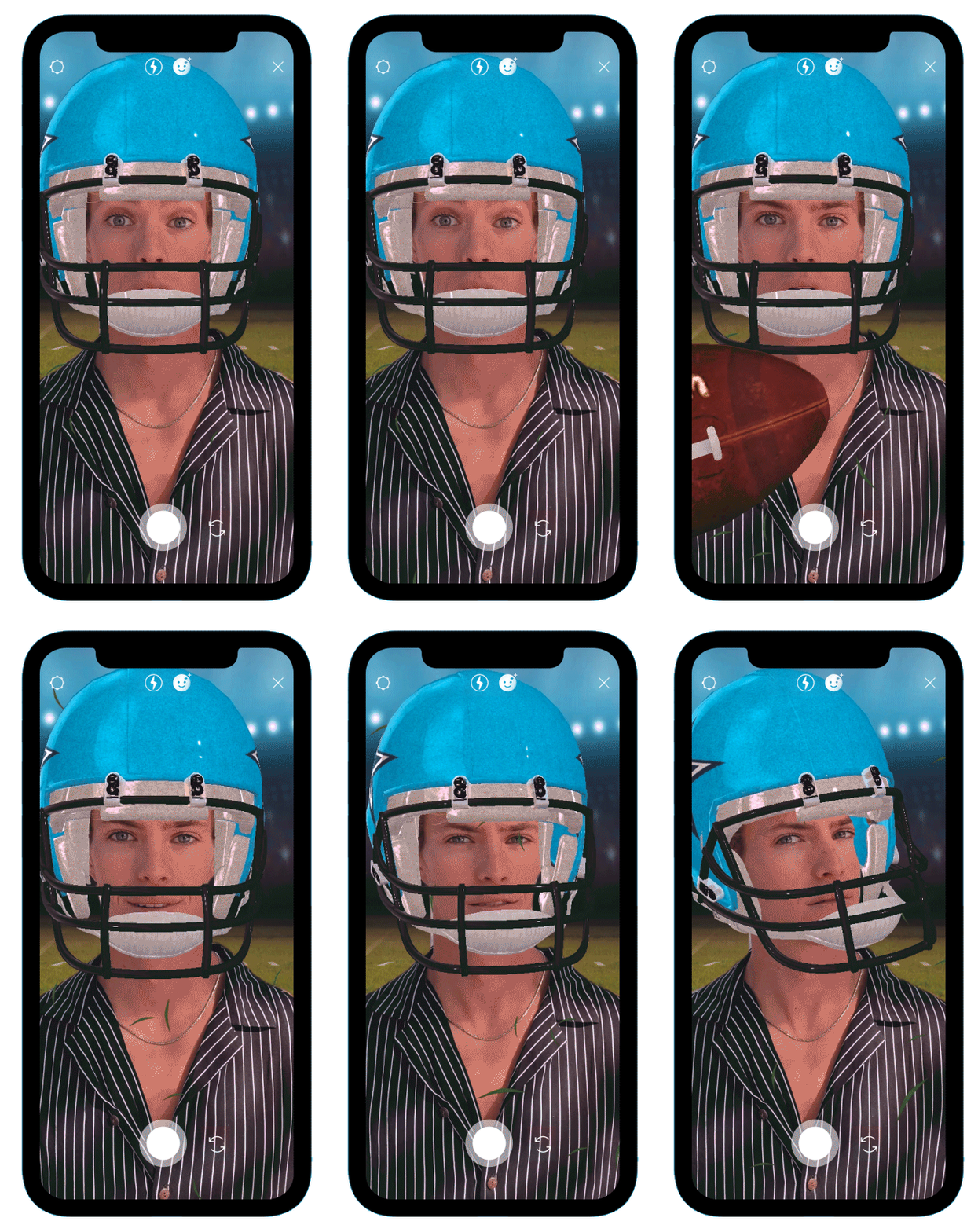
One of the most popular ways brands are using AR filters is through face masks. Whether it’s adding a beard, a flag, heart-shaped eyes, or an animal nose, face filters let followers express themselves in a unique and creative way.
By utilizing face tracking technology, AR filters can monitor various facial features like eyes, mouth, and eyebrows. This allows the filter to respond in real time, giving users an interactive experience that feels alive and fun. Imagine the engagement when your followers share their creative selfies with your branded face mask!

Wearables: Try Before You Buy
Wearables are another great way to engage with your audience through AR filters. Let your customers see how a t-shirt, a pair of shoes, or even sunglasses would look on them before they make a purchase.
Imagine a potential customer is browsing your store online and wonders how a pair of sunglasses would look on their face. With an AR filter, they can see themselves wearing the sunglasses virtually, all from their phone. By providing this interactive experience, you’re helping them visualize the product in real life, which can help push them closer to making a purchase.
3D Objects: Show Off Your Products in a New Way
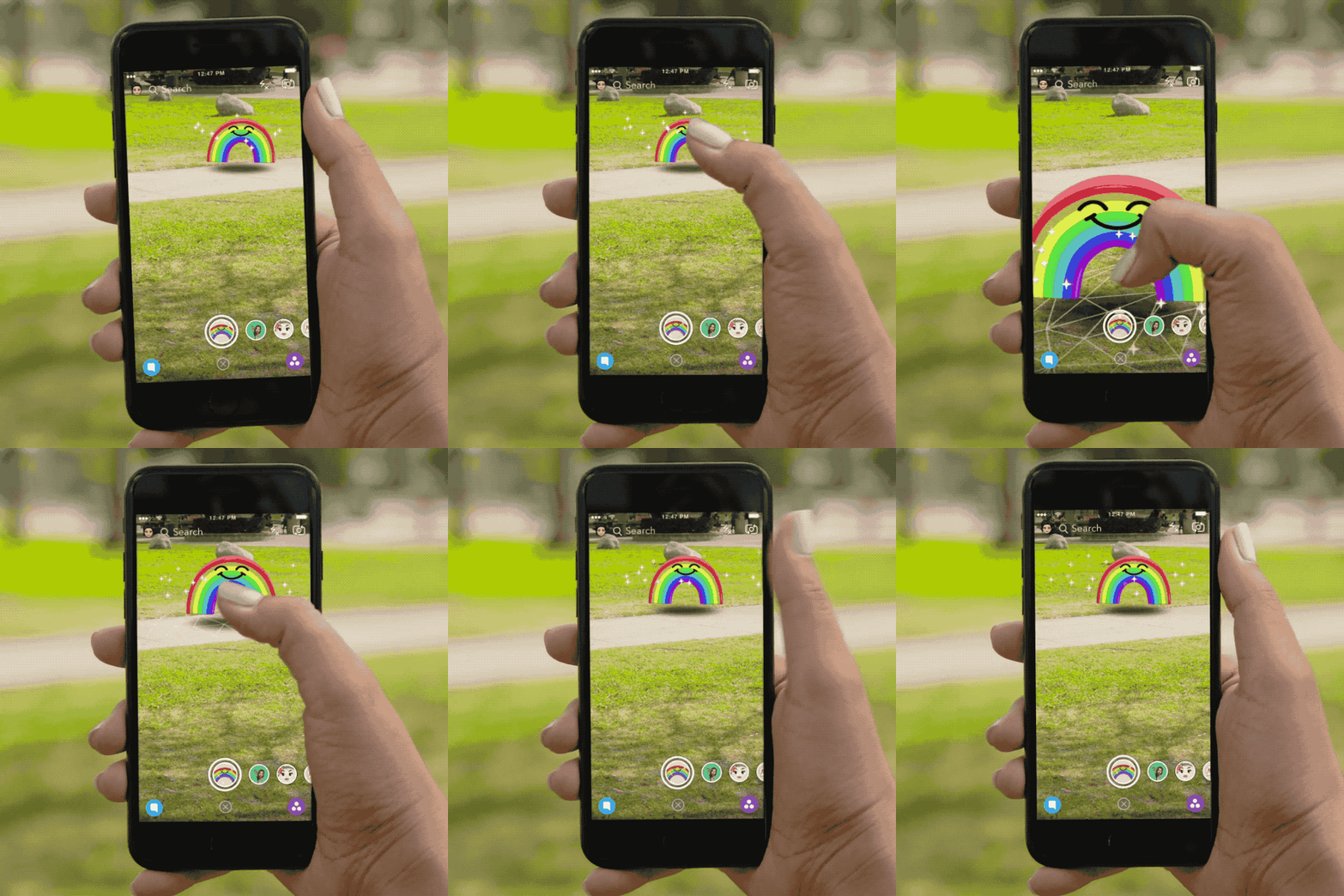
AR filters can also display 3D objects, which allow customers to get a closer look at your products. If you’re in the furniture business, for instance, imagine being able to show your customers a 3D model of a couch, integrated into their own living room through an AR filter.
This technology allows your customers to see exactly how a piece of furniture will look in their home before making the commitment to buy. It’s a great way to showcase your products in a more engaging, hands-on way, and it can significantly improve your chances of a sale.
AR Games: Interactive Fun for Engagement
Another innovative way to use AR filters is through AR games. These are simple, fun, interactive experiences that involve gestures and controls to play. For example, imagine a game where users can score a goal by moving their head or keep their character from falling by blinking their eyes.
These types of games not only entertain your audience but also encourage them to engage with your brand. When users interact with your brand through a game, it fosters a deeper connection, which can translate into long-term customer loyalty.

What’s Next? How Can You Get Started with AR Filters?
Now that you understand how AR filters can boost brand engagement, the next question is: What do you do next?
The good news is that AR filters are becoming more accessible, and creating them for your business doesn’t have to be complex or expensive. If you’re ready to elevate your brand and increase awareness and engagement, AR filters could be the perfect solution. Here are some key steps to help you get started:
- Define Your Goals: First, decide what you want to achieve with your AR filter. Do you want to increase brand awareness, drive sales, or simply engage with your audience? Understanding your goals will guide you in creating the right filter for your brand.
- Brainstorm Ideas: Think about what would resonate with your audience. What’s fun, interactive, and aligns with your brand’s message? Create an AR filter that taps into your customer’s interests and adds value to their experience.
- Partner with Experts: While it’s possible to create AR filters on your own, working with an experienced digital agency can save you time and ensure a high-quality result. They’ll help you bring your vision to life while making sure the filter performs well on social media platforms.
- Promote and Share: Once your AR filter is live, don’t forget to promote it! Share it on your social media platforms, encourage your followers to try it, and watch as they engage and share your filter with their friends. The more people share your content, the more organic reach you get.
The Future of AR: Enhancing Customer Experience
The real potential of AR filters lies in how they can enhance the customer experience. The future of eCommerce and brand engagement is all about providing customers with a seamless, fun, and personalized experience. By using AR filters, you can create a more interactive shopping experience that encourages customers to spend more time with your brand.
AR is here to stay, and if you’re not already incorporating it into your digital marketing strategy, now is the time to start. Whether it’s face masks, wearables, 3D objects, or games, there’s a wide range of ways you can use AR filters to boost brand engagement and connect with your audience in new and exciting ways.
Conclusion: Get Your AR Filter Today!
Are you ready to take your brand to the next level? Augmented reality filters offer a fun, interactive, and cost-effective way to engage with your audience, drive sales, and boost brand awareness. By offering AR filters that add value to your followers’ experience, you’ll see increased engagement and brand loyalty.
At Ikonik Digital, we specialize in creating custom AR filters that fit your brand’s unique needs. If you want to explore how AR filters can work for you, contact us today at [email protected]. Let’s create something amazing together!
The post These 4 Augmented Reality Filters Are Getting Brands 3x More Interactions appeared first on Ikonik Digital Agency | Digital Marketing & Web Development Agency | Jamaica.
]]>