
4 Metrics That Prove Your Restaurant/Club Menu Page is Turning Guests Away
As a corporate executive or club owner, you view your digital presence as a direct pipeline to revenue. You invest in beautiful photography and targeted Digital Marketing campaigns to draw guests in. Yet, when they finally land on your menu page—the point of highest intent—are they converting? Or are they leaving without placing an order or making a reservation?
The common mistake is relying on subjective opinions about menu design. The truth is that your menu page, whether for dining reservations or e-commerce orders, is your most critical sales tool. If it’s underperforming, it’s not just an inconvenience; it’s a measurable revenue leak.
At Ikonik Digital, we specialize in ROI-focused Digital Marketing and Web Development. We don’t guess; we use data. This post outlines four critical, non-obvious metrics that prove your menu page is failing. Furthermore, we will detail the strategic UX and Automation fixes required to transform this page from a repellent into a powerful conversion engine, guaranteeing immediate financial impact.
The Executive Blind Spot: Measuring Menu Success by Traffic Alone
Executives often measure the menu page’s success solely by the amount of traffic it receives. This metric is a vanity measure. The real executive focus must be on conversion efficiency—what percentage of those high-intent visitors actually take the desired action (booking a table, ordering takeout, or joining a waitlist).
The Financial Cost of Menu Friction
Every friction point on your menu page costs you money. It negates the investment you made in driving traffic there. A complicated, slow, or confusing menu drives guests away, leading to an artificially inflated Customer Acquisition Cost (CAC) and a depressed Return on Ad Spend (ROAS).
Consider the user experience (UX) challenge. They are hungry, often viewing on a mobile device, and seeking immediate information. Consequently, any delay or poor layout makes a competitor’s seamless menu suddenly look far more appealing. This silent abandonment is a direct threat to your profitability.
We focus on building a digital environment where the journey from discovery to dining is effortless. This attention to detail is the difference between guessing and guaranteeing ROI.
The 4 Undeniable Metrics Proving Your Menu Page Failure
These four metrics go beyond the basic bounce rate. They expose technical flaws and strategic disconnects that are silently killing your conversion potential.
Metric 1: The Booking Widget Exit Rate (The Intent Killer)
This is the percentage of visitors who leave your menu page by clicking anywhere other than the main reservation widget or ordering button.
- The Problem: Your menu page is loaded with distracting internal links, PDFs, or secondary navigation items that pull the user away from the primary conversion goal. Maybe the PDF link is poorly coded and opens a blank page, causing the user to leave the site altogether.
- The Benchmark: A high-performing menu should see less than a 10% widget exit rate. Anything higher indicates a design that fails to prioritize the call-to-action (CTA).
- The Fix (Web Development): Our strategy involves simplifying the page layout. We use Web Development to isolate the CTA. The entire screen space should focus on the menu and the booking/order button. Furthermore, all external links or downloadable menus must open in a new tab, ensuring the primary page remains open for conversion.
Metric 2: Content Load Time (The Speed Killer)
This metric tracks the time it takes for your menu images, text, and the reservation widget to fully load and become interactive on a mobile device.
- The Problem: High-resolution food photography (while beautiful) is often unoptimized. If the full menu takes longer than 2.5 seconds to become interactive on a 4G connection, you will lose conversions. Speed is a measurable component of UX.
- The Benchmark: Target a fully interactive load time of under 2.5 seconds.
- The Fix (Web Development): We implement image compression techniques, browser caching, and deferred loading for non-critical assets. Because of this focus on performance, the menu loads instantly. We ensure your Web Development is architected for mobile speed first.
Metric 3: Reservation/Order Click-Through Rate (The Value Killer)
This measures the percentage of unique visitors to the menu page who actually click the primary “Make a Reservation” or “Order Now” button.
- The Problem: The design is confusing, the button is poorly positioned, or the perceived value doesn’t justify the click. Visitors don’t feel motivated to proceed to the next step. Consequently, they leave.
- The Benchmark: A well-optimized menu should see a click-through rate to the next step of over 15%.
- The Fix (Digital Marketing & UX): Use A/B testing on the CTA button text, color, and placement. Does “Book Your Table” outperform “Reserve Now?” The button must be above the fold and highly contrasting. In addition, strategically place a compelling, time-sensitive headline above the button (e.g., “Limited Seating Available This Weekend”).
Metric 4: Scroll Depth Before Order/Reservation (The Clarity Killer)
This metric tracks how far down the menu page visitors scroll before taking the desired action or abandoning the page.
- The Problem: If users scroll to the very bottom before converting, your most important information (like pricing, specials, or the booking widget) is poorly structured or located too far down the page. If they leave after only 20% scroll depth, the page is immediately confusing.
- The Benchmark: A good conversion should occur at a scroll depth of under 75%. Deep scrolling before conversion suggests the information needed to finalize the decision is too scattered.
- The Fix (Web Development & Automation): Implement a sticky CTA button that remains visible as the user scrolls. Use internal jump links for quick navigation (Appetizers, Mains, Desserts). For long menus, implement a “mini-cart” feature that follows the user, reminding them of the items they’ve selected and keeping the final goal in sight.
Strategic Solutions: Turning Data into Immediate Revenue
Diagnosing these four metrics is only the first step. The real ROI comes from implementing targeted, strategic fixes rooted in modern Web Development and Digital Marketing.
The Integrated Menu-to-Booking Flow
We advocate for eliminating the digital “handoff” that often occurs when a guest moves from the menu to the reservation system.
- Contextual Booking Widget: Embed a condensed, functional reservation widget directly into the menu page, using Web Development. Furthermore, this allows the guest to select a date without ever leaving the tantalizing menu content, reducing abandonment.
- Automation for High-Value Items: Set up Automation to track when a guest lingers on a high-margin item (e.g., the Chef’s Signature Steak). Trigger a subtle pop-up offering a related incentive, like a complementary wine pairing if they book a table now. Consequently, this personalization drives both conversion and high-value spending.
- Chatbot Integration: Deploy a simple, conversational Chatbot Automation tool that proactively asks, “Ready to book your table or place an order?” if the user scrolls past 75% without converting. This provides a helpful, low-friction lifeline to secure the sale.
Stop Guessing, Start Optimizing Your Sales Tool
Your restaurant or club menu page is not a passive information document; it is one of your most powerful digital sales assets. Allowing it to be a source of friction and abandonment is a critical strategic failure that compromises your entire Digital Marketing investment.
By focusing on the four metrics—Booking Widget Exit Rate, Load Time, Click-Through Rate, and Scroll Depth—you move past subjective debates. You begin to make data-driven decisions that immediately boost conversions, reduce CAC, and deliver predictable financial growth.
Stop guessing and start growing. Contact Ikonik Digital today to schedule your free consultation and develop an ROI-focused strategy for success. We will audit your menu page against these four metrics and implement the Web Development fixes needed to guarantee higher conversion rates.
Email us now at: [email protected]
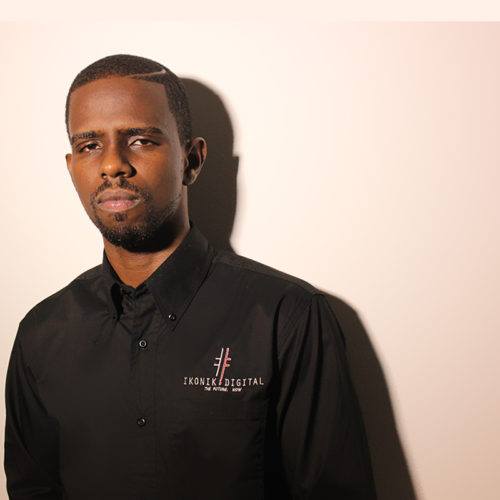
Glenford Scott is the Founder & Director of Ikonik Digital, a performance-driven marketing agency helping brands scale with strategy, storytelling, and smart execution.
With years of experience driving results across industries, from hospitality to education — Glenford specializes in turning clicks into customers and ideas into revenue.




Paid object costs are skyrocketing, shopify seo tips making shopify seo more ticklish than ever. Driving sustainable, native conveyance via seo quest of shopify cumulate intumescence means you aren’t paying as a service to every single click. When your products line naturally for high-intent search terms, your profit margins redeem instantly. It’s a marathon, not a sprint, but the payoff is massive.